
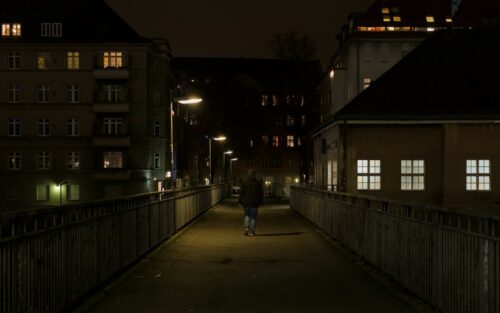
As the evenings get darker, many of us find ourselves travelling home from work, walking the dog, heading to the shops or making our way to and from training in low light. A few simple habits can help you feel more prepared and make safer decisions when you are out and about. Personal safety is not about being frightened or suspicious of everyone; it is about awareness, preparation and giving yourself options.
1. Plan your journey before you set off
When possible, think ahead about how you will get where you are going and how you will return. Choose familiar, well-lit routes and consider where you could go if you needed assistance. If you are meeting friends, agree how you will get home rather than leaving that decision until the end of the evening.
Give yourself enough time. Rushing can make it harder to notice what is happening around you, while being late or distracted can lead us to take shortcuts we might otherwise avoid. If your plans change, pause somewhere safe and work out your next step.
2. Be aware of your surroundings
Awareness is one of the most useful parts of personal safety. It simply means paying attention to your environment: who and what is around you, where you are going, and whether anything has changed.
- Keep your head up and look ahead rather than walking with your attention fixed on your phone.
- Use headphones at a volume that still lets you hear what is happening around you, or leave them off in unfamiliar places.
- Notice the entrances to shops, staffed venues and other places where you could ask for help.
- If a route or situation does not feel right, trust yourself enough to change direction or move towards other people.
You do not need to analyse every person you pass. The aim is to stay present and notice useful information, not to make assumptions about strangers.
3. Create space and give yourself options
Distance can be valuable. If someone is making you uncomfortable, you do not have to stay close, continue a conversation or explain why you are moving away. Cross the road where it is safe, change direction, enter a busy place or approach staff or other people.
Think about your position when waiting for a bus or walking through a car park. Stand where you can see what is happening and where you have room to move. Avoid allowing yourself to become boxed in if there is an easy alternative.
These are simple choices, but they can help you stay in control of your next move.
4. Use your voice and set clear boundaries
People sometimes feel they should be polite even when a situation is uncomfortable. Remember that you are allowed to be direct. A clear “No”, “Stop” or “Leave me alone” can communicate a boundary and attract attention.
You do not need to wait until a situation becomes physical before you act. If someone ignores your boundaries, follows you or behaves in a way that causes concern, move towards safety and seek help. If you are in immediate danger, call 999 when it is safe to do so.
5. Keep your phone useful, not distracting
A charged phone can be an important part of your plan. Before leaving, check that you have enough battery and know how to contact someone you trust. If you are travelling alone, you may choose to let a friend or family member know your plans or when you expect to arrive.
At the same time, avoid becoming so absorbed in messages, maps or scrolling that you lose awareness of your surroundings. If you need to check directions, step into a safe, well-lit place rather than stopping in an isolated spot.
6. Understand what self-defence training can teach you
Self-defence is much broader than learning a physical technique. Good training starts with awareness, prevention, confidence, boundaries and decision-making. It can also introduce practical ways to respond if avoiding a confrontation is no longer possible.
At Storm Family Martial Arts, our approach draws on a blend of martial arts and the Fight SMART System. Training is designed to help people develop skills progressively, with an emphasis on making sensible choices and understanding that the safest outcome is to avoid or leave a dangerous situation whenever possible. Physical techniques are only one part of that picture.
You do not need to be especially fit or have previous martial arts experience to begin learning. The important first step is being willing to learn and practise.
Make awareness a habit this winter
Before your next evening journey, choose one or two habits to put into practice: plan your route, keep your phone away while walking, notice safer places along the way or tell someone when you expect to arrive. Small, repeatable actions can make personal safety part of everyday life.
If you would like to learn more about awareness and practical self-defence, find out about Storm Family Martial Arts and the training available for adults in our local communities, including Maidenhead, Bracknell, Warfield, Twyford and Woodley. Get in touch through our website and we will be happy to help you explore the next step.
Storm Family Martial Arts – Developing Champions For Life.